

Four quick questions for newly qualified Elisabeth Morén
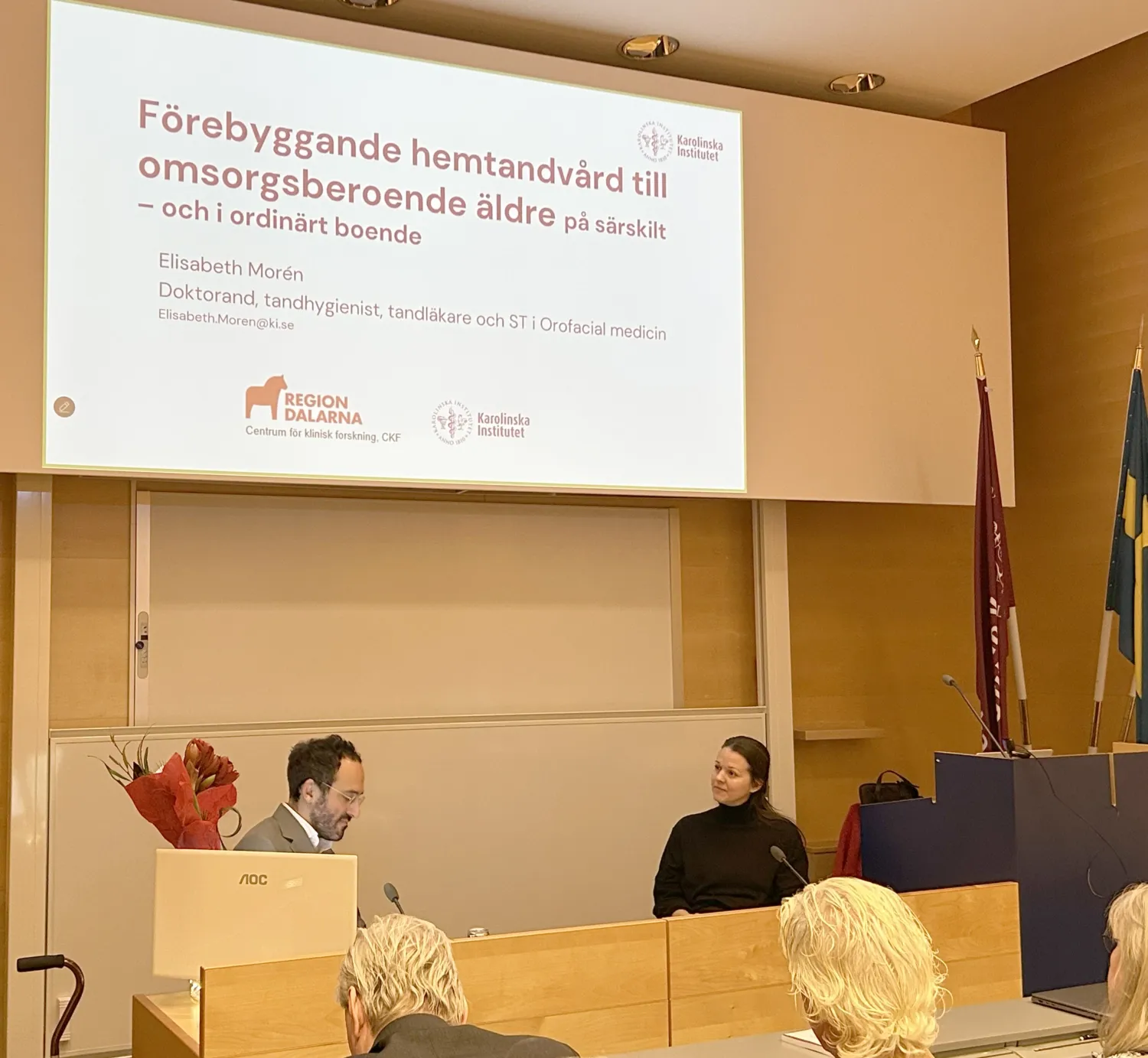
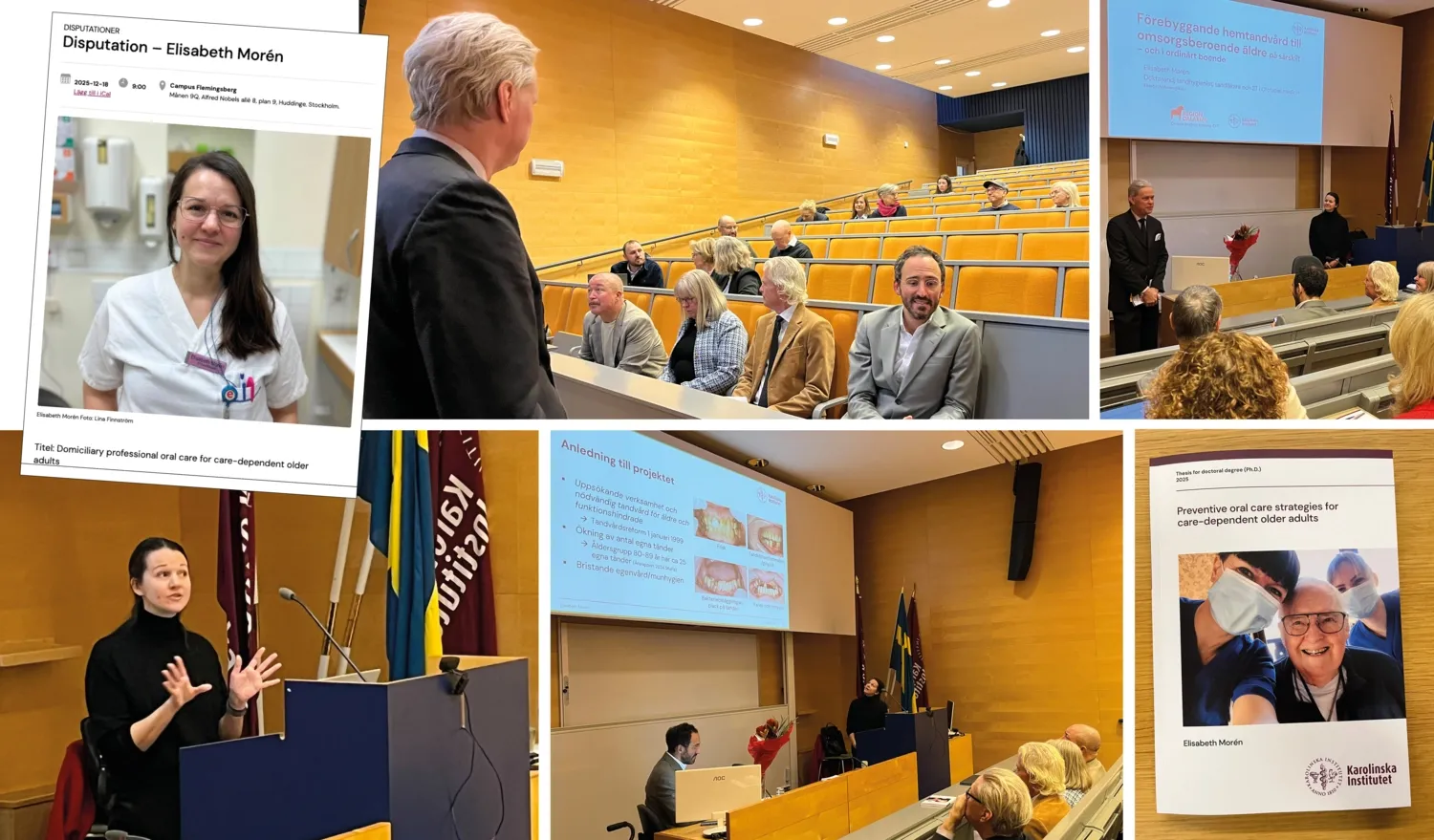
Elisabeth Morén is a newly qualified doctor at the Department of Odontology at Karolinska Institutet. Here she talks about her research, her time as a doctoral student and what lies ahead after her thesis defence.
How did you come to choose this topic?
My interest in preventive measures for elderly people in need of care grew through my work in special housing and home care during my studies to become a dental hygienist and dentist. I noticed that both the elderly and the staff did not always prioritise the elderly's oral hygiene, and that's where the seed was sown. I believe that daily tooth brushing is a natural part of daily hygiene. When I then had the privilege of starting to work at Folktandvården Stockholm Sjukhem, a clinic that mainly works with the elderly, I had the opportunity to apply for this project focusing on preventive measures for care-dependent elderly people, and luckily I got it!
What has been the most fun?
EVERYTHING! Conducting a study with everything that comes with it, such as planning, hiring data collectors and intervention staff, applying for funding, placing orders, internal training and much more. The whole experience has been very rewarding and educational.
What are your most important findings?
Daily toothbrushing with high-fluoride toothpaste appears to be sufficient to slow down the development of new root caries in this patient group, where regular home visits are resource-intensive.
I hope that our research will contribute to increased use and prescription of high-fluoride toothpaste for our care-dependent, home-dwelling elderly people in order to prevent root caries. It can also be considered a simple measure.
What happens now? What does the future look like?
Now I'm going to take a Christmas break and spend time with family and friends. After New Year, I will return to my work as a trainee dentist in Orofacial Medicine at Falu Lasarett and recharge my batteries for my upcoming exam in April 2026.
I will continue to be affiliated with the Karolinska Institute. There is still work to be done on the project, such as completing the manuscript and a microbiological section where we will analyse saliva and plaque samples that have been collected. I am doing this under the supervision of Professor Georgios Belibasakis. It will be a new and exciting track in my research journey.